
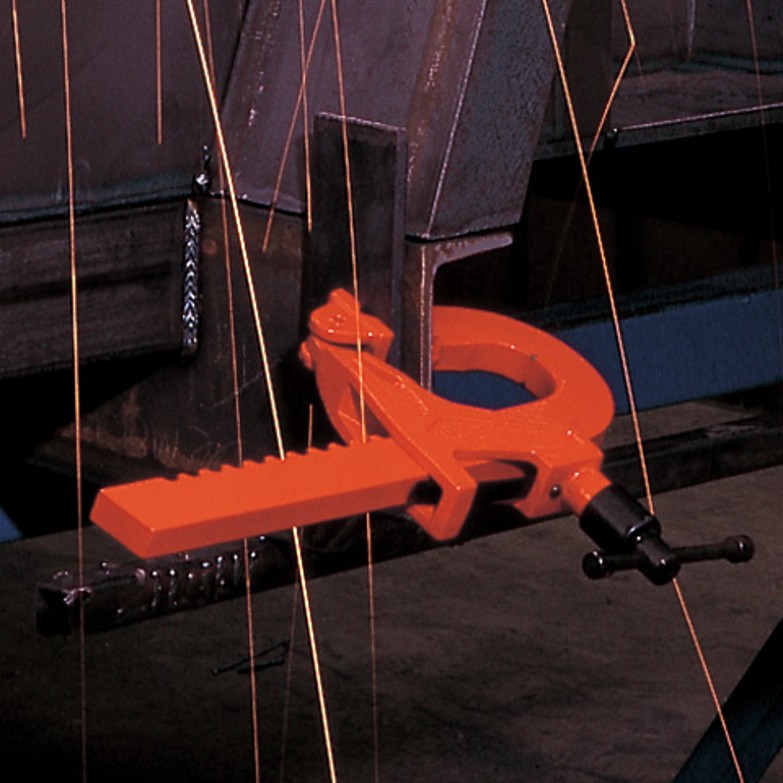
In welding, fabrication, and engineering, the quality of the final result often depends on something very simple: how securely the workpiece is held in place. While clamps are a basic workshop essential, choosing the right one is not always straightforward. Different tasks place different demands on work-holding, and using the wrong clamp can slow down production, reduce accuracy, and create unnecessary frustration.
A well chosen clamp does more than just hold material steady. It supports precision, repeatability, and efficiency across every stage of the job. That is why understanding the role of clamp selection is so important for busy workshops and professional fabricators.
Why one clamp does not suit every application
No two workshop tasks are exactly the same, so it makes sense that no single clamp is ideal for every application. A clamp that works well for light assembly work may not offer the strength needed for heavy-duty fabrication. Equally, a clamp designed for high-pressure holding may be impractical where speed and repeated repositioning are the priority.
Different projects involve different materials, shapes, thicknesses, and access points. Some applications require a firm, fixed hold for precision welding, while others call for flexibility and quick adjustment during repetitive production work. Choosing the right clamp means matching the tool to the task rather than expecting one solution to do everything.
Key factors to consider
When selecting a clamp for welding, fabrication, or engineering work, there are several practical factors to keep in mind.
Material
The type of material being worked on has a direct impact on clamp choice. Heavier or thicker materials may require a stronger holding force, while more delicate components need secure positioning without the risk of damage. Surface finish, shape, and sensitivity can all influence which style of clamp is most suitable.
Pressure
Applying the right amount of pressure is essential. Too little pressure can allow movement, affecting accuracy and weld quality. Too much pressure can distort the material or make adjustment more difficult. The right clamp should provide dependable holding power while allowing the user to maintain control over the setup.
Access
Workshop jobs often involve awkward angles, tight spaces, or complex assemblies. In these situations, ease of access matters just as much as strength. A clamp must not obstruct the task itself, especially in welding applications where clear access to the joint is important. The right design can make positioning easier and help maintain a smooth workflow.
Repeat use
In many working environments, clamps are used continuously throughout the day. Repetitive tasks demand equipment that is quick to handle, easy to reposition, and built to withstand regular use. A clamp that performs well once but struggles under daily pressure can quickly become a weak point in the workshop process.
Common workshop challenges
Professionals in welding and fabrication regularly deal with challenges that can affect both productivity and quality. Materials can shift during setup, awkward sections can be difficult to secure, and repetitive tasks can become inefficient when tools are slow to adjust or unreliable under pressure.
Inaccurate positioning can lead to wasted time, rework, and inconsistent results. In a busy workshop, even small delays add up. Poor work-holding can interrupt the flow of a job, create frustration for operators, and make it harder to maintain high standards across multiple projects.
This is why dependable clamping solutions are such an important part of the process. Reliable work holding helps reduce avoidable problems before they affect production.
The benefits of dependable work holding
Strong, reliable work holding brings clear advantages to any workshop environment. First, it improves stability, which supports more accurate work and better overall quality. When materials stay exactly where they should, operators can work with greater confidence and consistency.
Dependable clamps also improve efficiency. Faster setups, fewer adjustments, and reduced movement during the job all help save time. Over repeated use, this can make a significant difference to productivity.
Consistency is another major benefit. In fabrication and engineering, repeatable results matter. Reliable clamping helps standardise setups and supports a smoother, more controlled workflow. For teams working under time pressure, that dependability is essential.
Where Carver Clamps fit into workshop demands
Carver Clamps are well suited to the demands of professional welding, fabrication, and engineering environments because they are designed with dependable performance in mind. In workshops where stability, precision, and ease of use are critical, reliable work-holding makes a measurable difference to day-to-day output.
By supporting secure setups and consistent handling, Carver Clamps help professionals manage the practical challenges of busy workshop work. Whether the priority is accuracy, repeat use, or maintaining efficiency across a range of applications, dependable clamping solutions play an important role in keeping work moving.
For professionals who need equipment they can rely on every day, Carver Clamps are a trusted part of the setup.
Choose the right clamp for the job
Selecting the right clamp is about more than convenience. It is about improving precision, reducing disruption, and helping every task run more efficiently. In demanding workshop environments, the right work-holding solution supports better results from start to finish.
Download our brochure to explore the Carver Clamps range and find the right solution for your welding, fabrication, and engineering applications.