
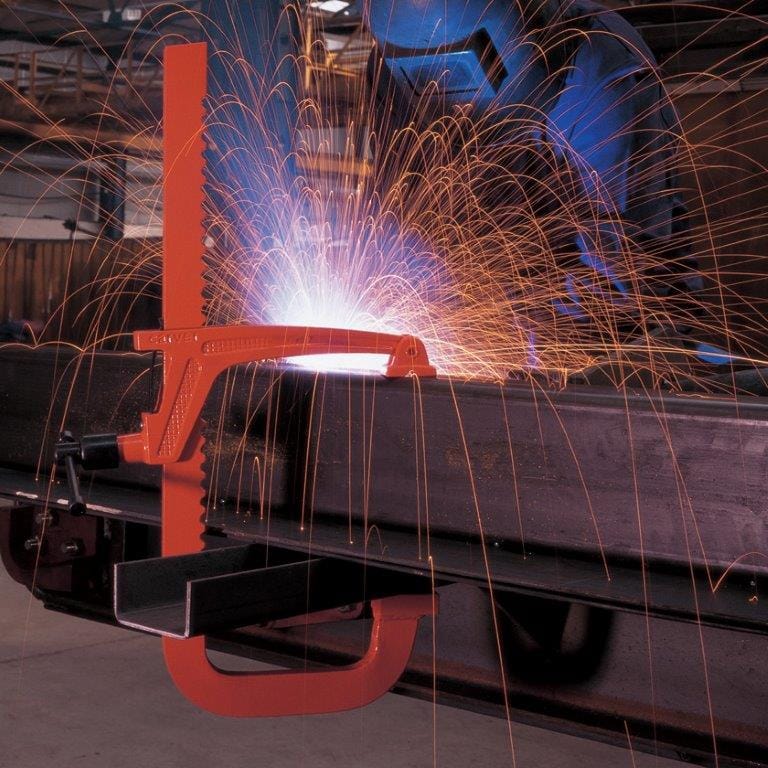
In an industry focused on cutting-edge technology, automation, and precision engineering, it can be easy to overlook the fundamentals. One of the most underrated yet essential elements of any welding or fabrication workshop is work-holding. The clamps, vices, and fixtures that keep materials securely in place are often taken for granted until something goes wrong.
Despite advances in CNC machinery, robotic welding cells, and laser cutting, the need for stable, repeatable, and safe work-holding has never been more important. Whether you are working on a one-off prototype or running a high-volume production line, the quality of your clamps directly affects the quality of your output.
The Importance of Stability, Repeatability, and Safety
At its core, work-holding is about control. When a component is clamped securely, it stays exactly where it needs to be throughout the cutting, welding, or assembly process. This stability is critical for achieving accurate results, especially when tolerances are tight.
Repeatability is equally important in production environments. If every clamp holds the workpiece in exactly the same position, every finished part will be consistent. This reduces rework, minimises scrap, and keeps production moving efficiently.
Safety is perhaps the most compelling reason to invest in reliable work-holding. A component that slips mid-weld or shifts during cutting can cause serious injury, damage expensive equipment, or ruin a job entirely. A secure clamp is not just a convenience it is a safeguard.
How Clamp Quality Affects Efficiency and Finish
The quality of a clamp has a direct impact on workshop efficiency. A well-designed clamp is quick to set up, easy to adjust, and holds firm without constant attention. This allows operators to focus on the task at hand rather than wrestling with equipment.
Poor-quality clamps, on the other hand, can slow everything down. If a clamp slips, distorts the workpiece, or fails to hold under pressure, the operator must stop, reposition, and start again. Over time, these small delays add up to significant lost productivity.
Surface finish is another consideration. Inferior clamps can mark or damage the material, especially on softer metals or finished surfaces. A quality clamp applies even pressure without leaving indentations, scratches, or distortion, helping to maintain the integrity of the final product.
What Professionals Should Look for in a Clamp
When selecting clamps for welding and fabrication, professionals should consider several key factors:
A clamp that ticks all of these boxes will pay for itself many times over in terms of time saved, rework avoided, and consistent quality delivered.
Why Durability and Reliability Matter Long Term
Workshop tools take a beating. Clamps are dropped, exposed to heat and spatter, and used day in, day out. Cheap clamps may seem like a cost-saving measure, but they often fail when they are needed most — and replacing them repeatedly is a false economy.
Investing in durable, well-engineered clamps means fewer replacements, less downtime, and greater confidence in your equipment. Reliable clamps become trusted tools that operators reach for instinctively, knowing they will perform every time.
Over the long term, quality work-holding equipment contributes to a safer, more efficient, and more profitable workshop.
Discover the Carver Clamps Range
For over a century, Carver has been engineering precision clamping solutions for professionals who demand reliability, durability, and performance. From T-bar clamps and rack clamps to specialist welding fixtures, the Carver range is designed to meet the demands of modern fabrication environments.
If you are looking to upgrade your work-holding equipment or simply want to explore what is available, visit the Carver Clamps range today.
Explore the full range at carverclamps.com